Ceiling Fans That Give Mom a Breeze
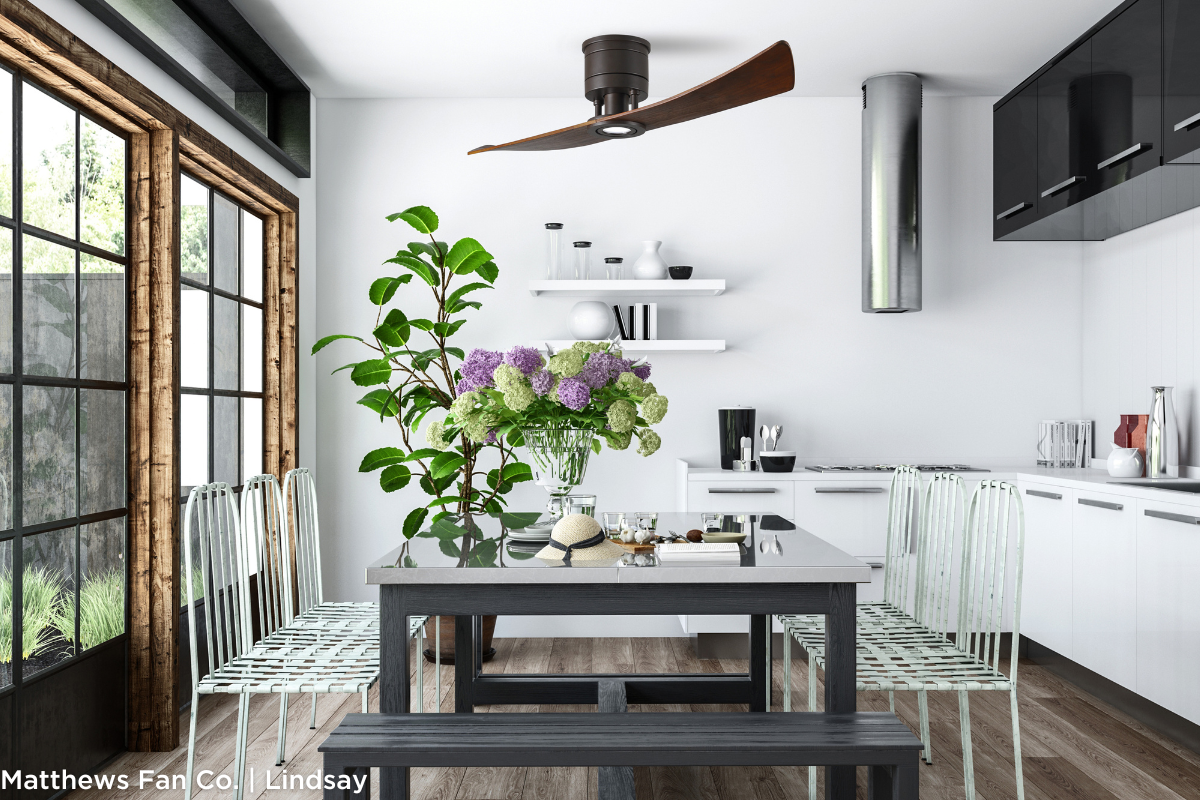
Mom deserves to put her feet up and relax this month, and a stylish ceiling fan is a wonderful way to create a soothing environment for her at home. A ceiling fan will also give you a head start in preparing for the warm months ahead.
A ceiling fan does double duty as a decorative and functional design feature. Its many benefits, from adding style to improving a home’s energy efficiency, make it a natural choice for many rooms in a home. In other words, a ceiling fan looks good and does good — perfect for Mom this year. Let’s dive into its benefits, where to install, and how to choose a ceiling fan in any room.
Ceiling Fan Benefits
Ceiling fans are having a moment. They are currently the top-searched home feature on Google, according to a study of this year’s in-demand home products by Agent Advice. A ceiling fan is a helpful addition to most rooms because it’s a fixture that fully integrates function and style. It complements a room’s interior decor and offers several benefits you can enjoy all year long.
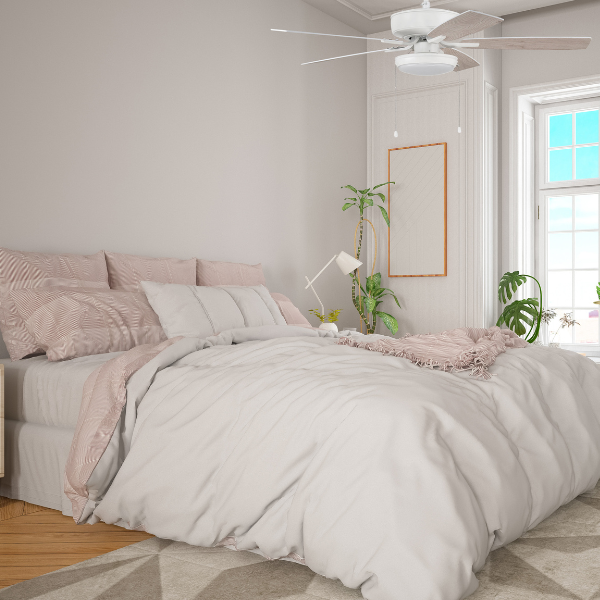
Craftmade | Pro Plus Ceiling Fan
Adds an Appealing Design Feature
Ceiling fans have come a long way since the traditional models of the 1980s. Because ceiling fans have become a design feature, manufacturers now offer many different styles to match or complement design themes and aesthetic eras. Choose from various materials, blade numbers, and shapes, bases, and finishes that suit your preferences.
Maintains Indoor Temperature
While a ceiling fan doesn’t cool air, it moves it around a room to maintain a consistent temperature all year long, depending on the direction the blades are spinning.
Improves Airflow
A ceiling fan keeps air circulating throughout a room. When windows are open, a ceiling fan moves fresh air in and stale air out.
Reduces Energy Consumption
Ceiling fans keep air moving which makes you feel cooler in warmer temperatures. You can increase your thermostat a few degrees to reduce energy consumption caused by air conditioning and lower your monthly bill.
Creates a Light Source
Select a ceiling fan with an integrated light fixture to add more ambient light to a room.
Where to Install a Ceiling Fan
Except for kitchens and bathrooms, most rooms in the home are fair game for a ceiling fan. With the many benefits a ceiling fan offers, it makes sense to spread them in a home to maintain consistent airflow and temperature between rooms.
Don’t hesitate to add a ceiling fan in a:
Living room: Next to the kitchen, the living room is the heart of the home and is where most people congregate.
Bedroom: Regulate your body temperature for a good night’s sleep.
Home office: A ceiling fan improves air circulation and disperses heat generated by computers and office equipment.
Loft or bonus room: These lounge or study spaces are typically on the second floor and can heat up quickly without good airflow.
Outdoor living space: A ceiling fan installed in a covered patio or porch adds instant charm and an excuse to stay outside longer.
Home gym/fitness room: Keep yourself cool when breaking a sweat.
Finished basement: Below-grade spaces like basements get stuffy, and a ceiling fan keeps air circulating from open windows.
How to Choose the Right Ceiling Fan
Here are our top tips for selecting the best ceiling fan for each room in your home.
1. Find Your Size
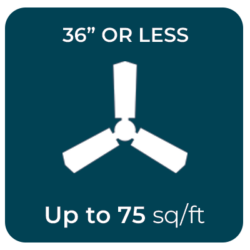
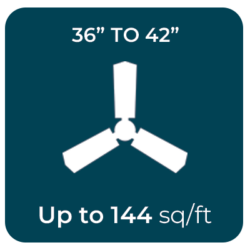
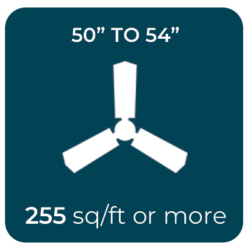
Ceiling fans come in several different size ranges, and it’s important to match your selected model to your room’s size. To figure out what size ceiling fan you need, multiply your room’s width and length to calculate its square footage. Look for a ceiling fan that falls within the appropriate range, according to the American Lighting Association:
2. Determine the Mounting Type
For safety, your room’s ceiling height will impact how you can mount a ceiling fan. When determining ceiling fan height, allow for at least seven feet of clearance between the floor and fan blades. A room with a lower ceiling height of eight feet or less requires a low-profile ceiling fan. Avoid installing a ceiling fan with blades that are too high — this limits the amount of air circulation throughout the room. Rooms with very high or vaulted ceilings require a mounting rod for optimal performance.
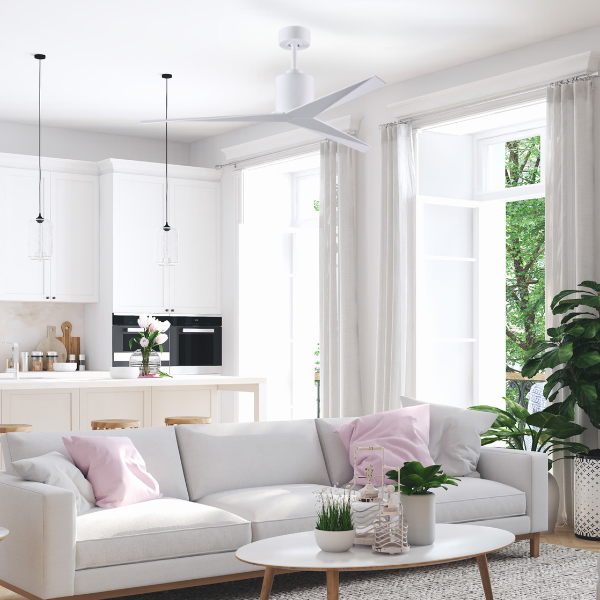
Matthews Fan Co | Eliza H
3. Find Your Style
Gone are the days of sacrificing style for ceiling fan comfort. Today’s ceiling fans come in hundreds of styles with different materials, blades, and finishes to make your room look amazing. Here are a few of the most popular ceiling fan styles:
Craftsman, Fan D’Lier, Industrial
Kids/ Whimsical, Modern, Outdoor
Rustic, Traditional, Tropical
4. Decide on Controls and Special Features
Finally, choose how you would like to operate your ceiling fan. Standard models include a pull chain, which works fine for lower ceilings. For higher ceilings, you’ll need a ceiling fan with remote control or wall panel operation for convenience and safety.
A typical ceiling fan consumes about 75 watts of power per day and requires significantly less energy than central air conditioning. If you want to reduce your home’s energy consumption even more, consider purchasing an ENERGY STAR certified ceiling fan that is 60% more energy efficient than standard models.
Ceiling fans are available with a few more bells and whistles if you prefer additional features for easier operation. A dimmable light offers more control over illumination depending on the time of day and your desired ambiance. Smart ceiling fans are also available with wireless integration so you can operate them via an app or Alexa or Google Assistant.
Make Mom Cool This Season
Make Mom happy this Mother’s Day and all summer long by creating a home that’s cool and comfortable. For the best selection of high-quality ceiling fans, visit a lighting showroom near you to select her style.

Bathroom Lighting Trends

Kitchen Lighting Trends

Outdoor Lighting Trends

Design