Stumped on Lighting Selection? Get 5 Foolproof Tips From the Experts

Picking lighting for your home involves a bunch of micro-decisions that add up and can feel overwhelming. Factors such as room function, the number of fixtures, fixture type, size, and finish all need careful consideration.
It’s easy to get lost in all the design decisions.
That’s why we are taking much of the guesswork out of your light selection. We’ve rounded up expert lighting advice from member showrooms across the country to help you brighten up your rooms with confidence.
 Light By Type
Reflection time. Before you set foot in a store or hop online to shop, understand how you need to light your room. Whether it’s reading a book in the living room or chopping veggies in the kitchen, lighting’s purpose or function is a good starting point.
Different rooms have different functions, so it is important to establish that upfront to make your decision process move more smoothly. Ask yourself, “What do I want to do in this room?” and “How do I want to feel in this room?”
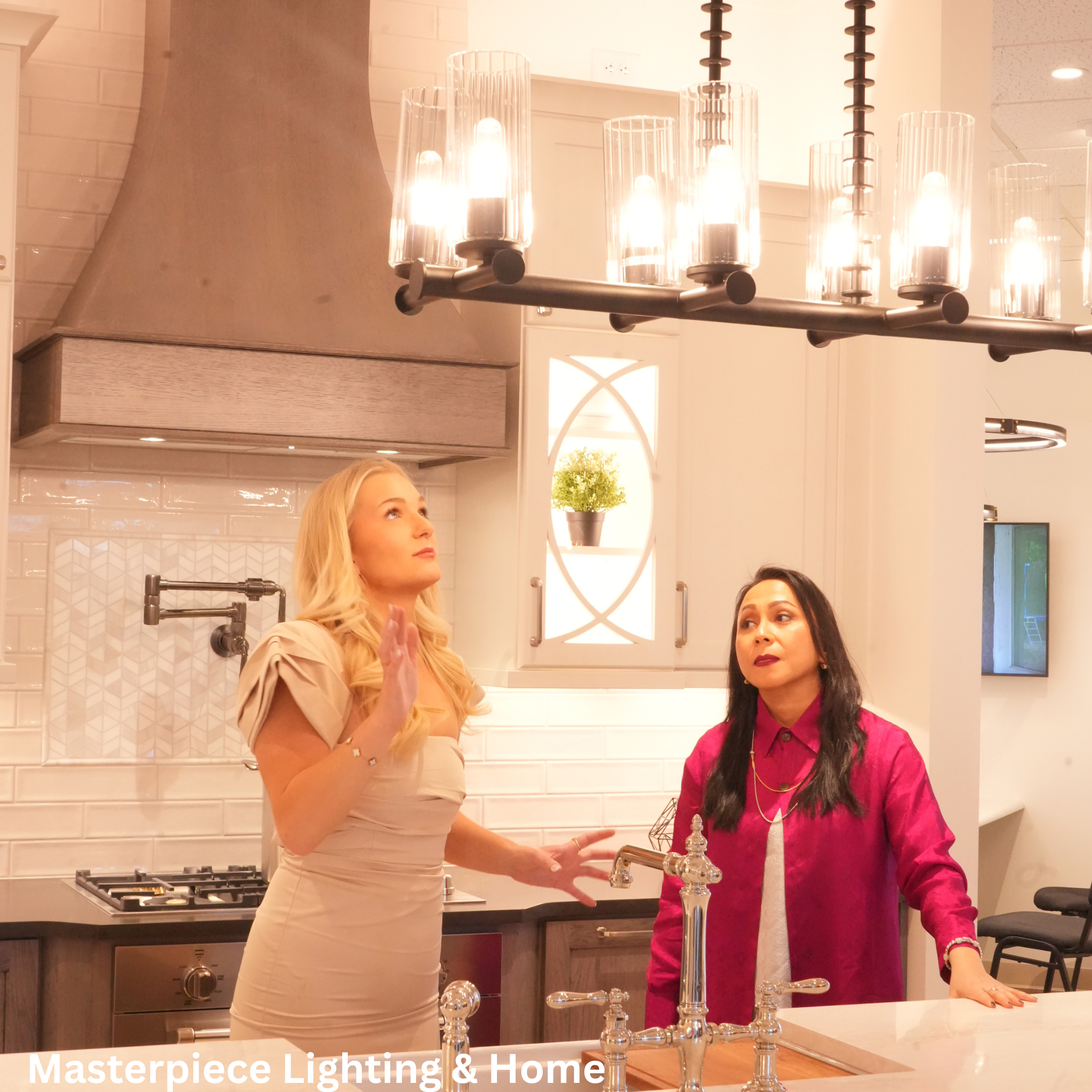
It helps to think of lighting a room in layers or types. “People don’t often think about how functional and nice it looks to have those 3 layers of light,” says Krystal Balderas of Accent Lighting.
Here are the three primary lighting types:
Ambient lighting: A source of general lighting from above or the side
Task lighting: A brighter focused light source to illuminate specific activities
Accent lighting: Lighting that draws attention to an architectural feature, piece of furniture, or decor
Take Measurements
Take accurate measurements of your room, noting its overall square footage along with general shape (boxy, rectangular, etc.). Measuring ceiling height is also essential, especially if you’re planning to install a semi flush mount, chandelier, or pendants.
Lighting is a key design element and works in tandem with a room’s features and furnishings to create a uniform and cohesive look. Kim Willis of Solas Lighting recommends taking photos of your room(s) and bringing them to the lighting showroom. “We like to visually build the room, and that goes back to the design aspect.”
Size and scale are important so your fixtures complement existing decor, don’t inhibit movement, and are safe. Taking measurements of your rooms will also tell you how big you can (or shouldn’t) go in fixture size. “Most people don’t realize how big you can actually go. It makes such a presence and doesn’t have to cost a lot,” says Marty Lepper from Urban Lights.
Start With One
Like any large home improvement project, deciding on a room’s lighting is best done one step at a time to make it more manageable. Angie Dalrymple from Southern Lights says many customers feel overwhelmed in her 25,000 square foot showroom. “I always tell people not to look at everything at once. If you try to think of 20 different light fixtures in your house at one time it’s too much.”
For best results, start with a fixture that will double as a focal point, like a chandelier, pendant, or primary floor lamp. A focal point fixture is the design “leader” around which all other lighting can follow. “Focus on one item [fixture] at a time and narrow down what they like and don’t like based on that one piece,” says Dalrymple. Its style, scale, and finish can guide you as you consider other types of lighting in the room. Once you’ve decided on the room’s primary fixture, selecting supporting lighting becomes easier.
Pick a Style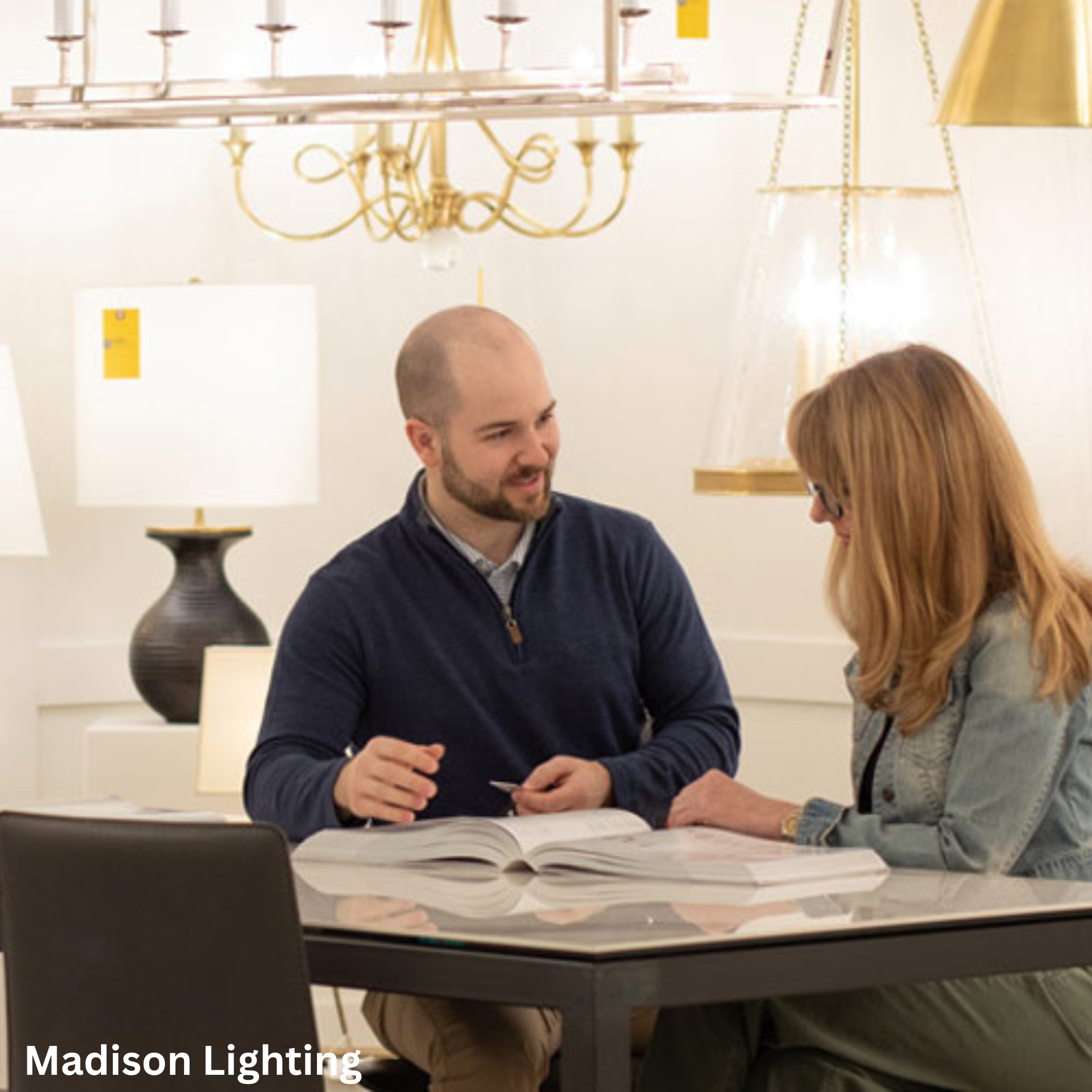
Mixing and matching light fixtures can look amazing, but it can be hard to know where to start and how to do it well. Design experts at your local lighting showroom are great resources and can help you select multiple fixtures that work well together in a room.
To get you started, Megan Rockafellow from Spectrum Lighting recommends building out a room’s lighting on a specific feature. “I always say style over finish, so choose a style that works best for you and work around the available finish options.”
Style can match, complement, or contrast your room’s existing style and furnishings. Farmhouse, industrial, rustic, traditional, modern, and mid century are a few of the many different styles you have to choose from.
Once you’ve decided on fixture style, it narrows your choices and makes accompanying lighting decisions easier. To create a cohesive look, simply mix fixtures in finish or color and size from the same style family.
Get Expert Advice
While shopping for your home’s lighting can be fun and rewarding, you don’t have to do it alone. It can help having an expert to answer questions, make suggestions, and offer a neutral eye.
Lighting showroom representatives are experts in the industry and are up to date on the latest lighting trends, brands, and styles. They know what works best for most room sizes, functions, and dimensions. Bring them photos of your home or a floor plan, and they can show you how to select lighting for each room in your home that reflects your style.
Here are just a few of the complementary services a lighting showroom offers:
- Space planning and evaluations
- Lighting plans
- Fixture shopping lists
- Bulb and brightness suggestions
- Energy efficiency recommendations
- Smart lighting management plans
Showroom consultants are dedicated to helping people like you discover the best lighting for their needs, from one-room makeovers and remodels to new construction homes. “We want to find the perfect piece for them [our customers] and give them all the options,” says Willis of Solas Lighting.
Ready for one-on-one advice? Get in touch with a local lighting showroom to talk to a design expert.

Bathroom Lighting Trends

Kitchen Lighting Trends

Outdoor Lighting Trends

Design