
Looking for the Perfect Ceiling Fan? Here’s What You Need to Know
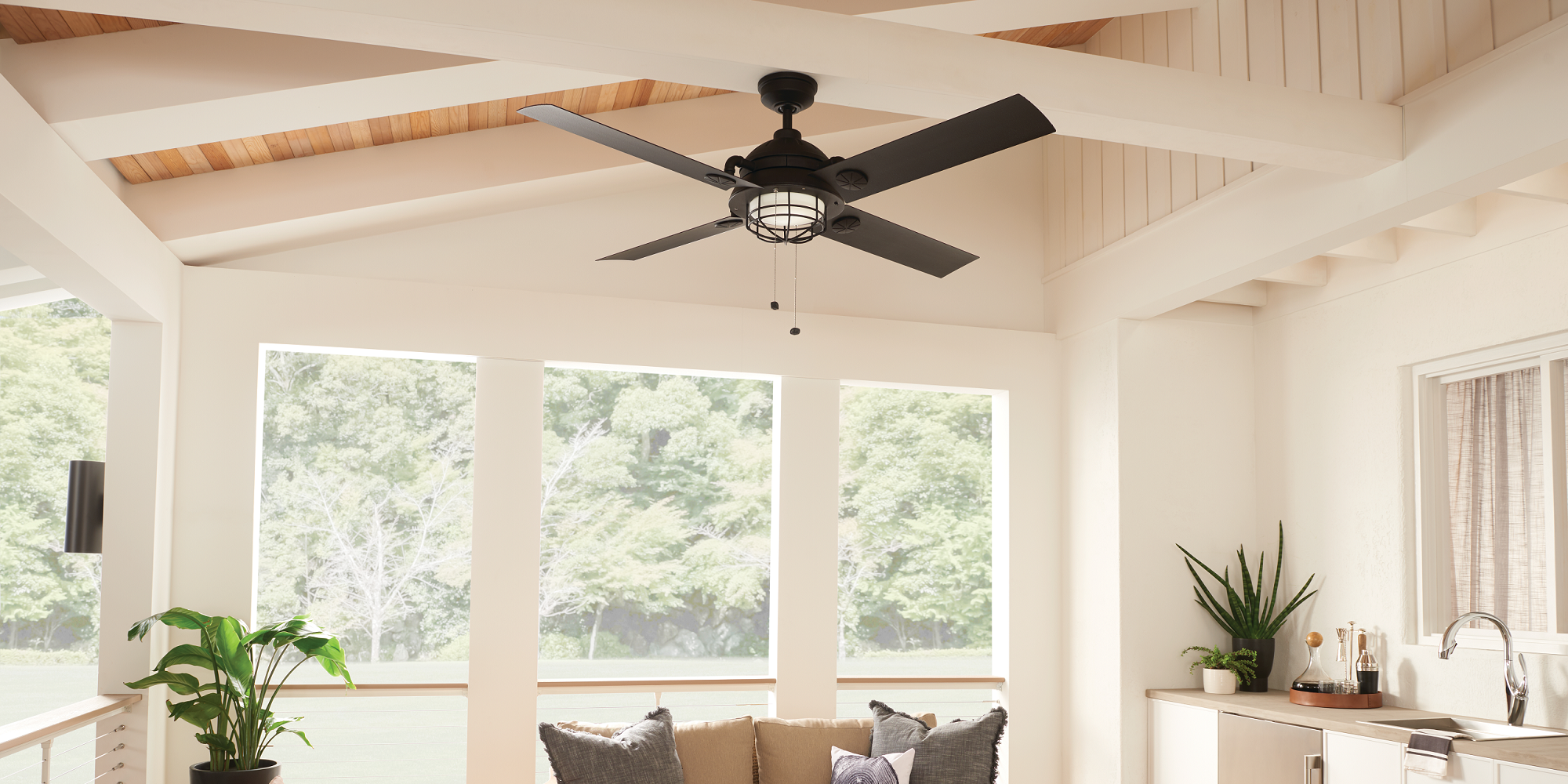
When you want to feel cool and comfortable during the warmer months, ceiling fans offer the perfect blend of style and utility. With lots of different designs to choose from and enhanced control options, ceiling fans have come a long way in both form and function. But with all of the size, lighting, and style choices available, where do you start your search? In this buyer’s guide, we break down everything you need to know to select the right ceiling fan for your space.
Why You Need a Ceiling Fan
While a ceiling fan doesn’t cool a room’s temperature, the air circulation it provides makes you feel cooler, which is ideal during warm summer days. Ceiling fans enhance rooms with more windows and natural light coming in by harnessing airflow to improve circulation and energy efficiency. In fact, installing a few strategic ceiling fans throughout a home will consume less energy than normal AC operation. You may be able to run your AC less or not at all. And with inflation at a nearly 40-year high and energy costs on the rise, the ability to lower your monthly energy bill is a plus.
You can even use a ceiling fan during the cooler months to keep a room warm. Models with reversible motors allow the blades to move in a clockwise direction — this moves cooler air up to the ceiling and pushes warmer air down into the room.
Ready for a ceiling fan yesterday? Shop our premier suppliers for an incredible ceiling fan for your space.
Get the Right Ceiling Fan Size for Your Space
When it comes to selecting any fixtures for your home, it’s all about scale. In other words, you’ll need to buy the right size that fits your room, whether it’s a ceiling fan for a bedroom, living room, or home office. A ceiling fan that’s too small won’t give you the airflow you need, and one that’s too large will make your room feel like a wind tunnel.
Find Your Blade Size
Before you start shopping, take your room’s measurements to get its square footage. You

Big Ass Fans Haiku Gen 4
’ll need it to determine your ideal blade span. The longer the ceiling fan blade size, the higher the total blade span. Most blade spans fall in the 29 to 60 inch range.
| Room Size | Blade Span |
|---|---|
| 75 square feet or less | 44 inches or smaller |
| Up to 350 square feet | 48-58 inches |
| Over 350 square feet | 60 inches or larger |
Source: American Lighting Association
Know Your Ceiling Fan Height
Ceiling fans should be installed a minimum of seven feet above the floor for safety, though eight or nine feet is better. For optimal airflow, fans should be positioned at least 10 inches from the ceiling.
For ceiling heights of eight feet or lower, select a flush-mounted model (also called a ceiling hugger) that installs directly into the ceiling. If you have high or vaulted ceilings, you’ll need a downrod to extend your ceiling fan to the proper height. Most manufacturers include a six-inch downrod and offer your choice of downrod size when you place your order.
Here’s a quick downrod reference guide:
| Ceiling Height | Downrod Length |
|---|---|
| 9 feet | 6 inches |
| 10 feet | 12 inches |
| 11 feet | 18 inches |
| 12 feet | 24 inches |
| 13 feet | 36 inches |
| 14 feet | 48 inches |
Choose the Right Amount of Power
Motor power is what makes the ceiling fan. Ceiling fans typically run in the 1/60 to 1/3 hp range, with larger fans requiring more power to move the longer blades. Motors will often include a CFM rating, or the number of cubic feet of airflow per minute. Higher-powered motors will produce a higher CFM and make a room feel cooler – usually the primary reason why people purchase ceiling fans.
Higher-powered motors are often louder, so look for a ceiling fan model with sealed bearings and a rubber flywheel to reduce noise transmission. DC motors (those that convert and regulate electrical power) are typically quieter than ceiling fans with AC motors that operate from your home’s direct electrical current.
Light It Up
Get the most functionality from your ceiling fan with one that includes a light. A ceiling fan with light provides overhead and ambient light that’s necessary for any room. A remote control allows you to control the fan and light operation independently. It may also offer dimming capabilities, depending on the model. Look for a ceiling fan that comes with lighting pre-installed, or choose a model with a light kit that you can easily remove should your style or lighting preferences change.
Select Your Style
Gone are the days of limited ceiling fan designs that don’t blend with your room’s decor. There are more ceiling fan designs than ever that easily complement your preferred style. To choose the right ceiling fan for your space, use your room’s existing furnishings and fixtures as a guide. Most ceiling fans fall into one of these design categories:
- Farmhouse
- Industrial
- Mid-century
- Modern
- Nautical or tropical
- Rustic
- Traditional
- Windmill
For a bolder look, consider a fandelier — a type of ceiling fan that combines the functionality of a fan with the beauty of a chandelier so you don’t have to sacrifice style for comfort. Fandeliers are ideal for living rooms, bedrooms, or any space where you’d like your overhead lighting to act as a decorative focal point.
Outdoor ceiling fans are becoming increasingly popular as people invest in their outdoor living areas. Ceiling fans can be hard-wired into covered porches and patios to improve airflow and lighting outside. Look for models that are outdoor rated to better withstand water, moisture, wind, and temperature fluctuations.
Ceiling Fan Control Options
In addition to the many style options available, you have options for ceiling fan operation. Choose from the traditional pull-chain or opt for a remote control for convenience or if your ceiling fan height is too high for pull-chain operation. If you purchase a ceiling fan with a light, wire the unit to a double switch so you can turn the fan and light on and off separately.
Some ceiling fan models now come equipped with smart technology that allows you to control and automate directly from your device or home automation platform. These Wi-Fi or Bluetooth-enabled fans integrate with voice-controlled assistants like Siri, Echo, and Alexa so you can call out your fan’s on-off, blade speed, and lighting functionality without the need of a physical switch or remote control (though most manufacturers provide a control, too).
Start Ceiling Fan Shopping
Lighting One member showrooms offer expert advice and guidance on hundreds of ceiling fan options and styles. Many showrooms will even review your home’s blueprints, layout, or photos to help you make the best ceiling fan choice for your space. Start your search with these premier lighting suppliers and find a showroom to shop near you!

Bathroom Lighting Trends

Kitchen Lighting Trends

Outdoor Lighting Trends

Design