Best Lighting Types for a Kitchen Island
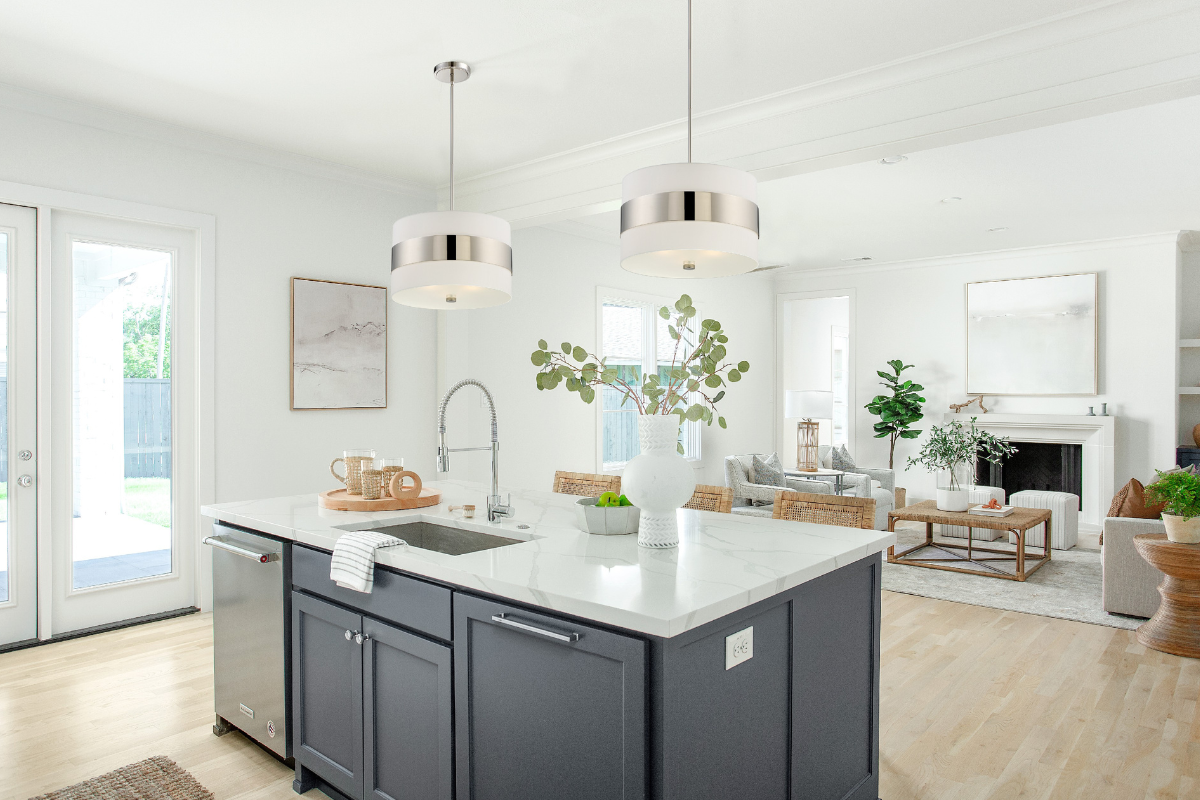
An island is a kitchen’s central hub where many activities tend to take place. Food prep, cooking, eating, and socializing are a few of the functions of this multi-purpose feature. Layers of light are needed to properly illuminate a kitchen and island.
Because this type of task lighting must balance function and style, it can be challenging to settle on a fixture size, quantity, and look. In this kitchen island lighting guide, we’re taking some of the guesswork out of how to pick the right fixtures for your space. Here are some expert-recommended tips that are foolproof and easy to follow.
1. Take Your Measurements

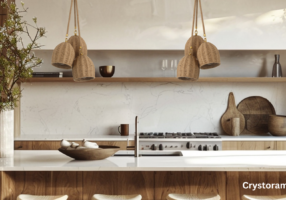
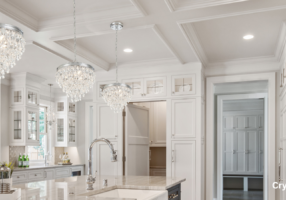
Libby Langdon For Crystorama Sylvan 8 Light Chandelier
The first step is to take accurate measurements of your island’s dimensions. Using a measuring tape, measure the island’s length, depth, and counter height. These three measurements determine how many fixtures you need and the amount of lumens required to light up the area. Bring these dimensions to your local lighting showroom along with a photo of your kitchen island for professional recommendations customized to your project.
When reviewing the following island lighting tips, plan for 30 to 36 inches between the bottom of the light fixture and the countertop. Centering fixtures above the island usually looks best, and plan for at least 12 inches between the fixture and the end of the island and 26 to 30 inches between each fixture.
A helpful way to visualize what this looks like is to blow up balloons to the approximate fixture size you like and hang them from the ceiling by a string. This exercise is especially helpful if your kitchen also has recessed lighting near the island so you can better determine proper sizing.
2. Decide How Many Fixtures You Want
Since the island is a place where several different activities take place, you’ll want to be sure the entire surface receives an even amount of light. Your kitchen’s square footage and the size of your island will ultimately drive your choice. Size and scale are important factors because they help a room look balanced. Large drum pendant fixtures look out of place in a 10’ x 10’ kitchen, for example.
Get the right lighting and look you’re after with a single large pendant or chandelier, or a combination of two or three smaller-sized pendant lights.
“Most of my jobs [kitchen lighting projects] are going to have pendants,” says Elle Massullo, sales account manager at Greer Lighting Center in Taylors, South Carolina. “Especially anything that is new construction, they are going to include pendants over the island.”
If you prefer the look of multiple kitchen island pendant lights, two fixtures are more common than three. Good design practice is one fixture for every two feet of counter space.
Another important consideration is whether you prefer kitchen island light fixtures to blend in with the other elements in the room or if you want them eye-catching and to make a statement. Bolder designs typically work better as a single fixture, while designs that coordinate and blend can be either a single fixture or multiple.
3. Pick Your Pendants
Now it’s time for the fun part. Keep these suggestions in mind when shopping for lighting (in person and at showroom is recommended for a top-quality selection):
Factor functionality first
How you use your kitchen island will help you narrow your pendant light search. Balancing functionality and aesthetics is essential.
Meal prep that includes a lot of cutting and chopping requires an even amount of downlighting for safety. If your island includes a sink or a cooktop, you must also consider the fixture’s ceiling location, size, and material. Rising steam, smoke, and splatters will affect the look and integrity of your fixtures. For example, linen shades don’t typically react well to lots of moisture.
Condensation will appear on glass fixtures when cooking or running hot water, which will also affect the look of your lighting.
Weigh advantages of large vs. small fixtures
Whether to go large or small is mostly determined by your island’s size and your personal preference. And feel free to infuse your space with some creativity, says Massullo. “Everybody’s home and kitchen should be a reflection of their unique personality.”
Here are a few factors to consider when trying to select the right kitchen island fixture size:
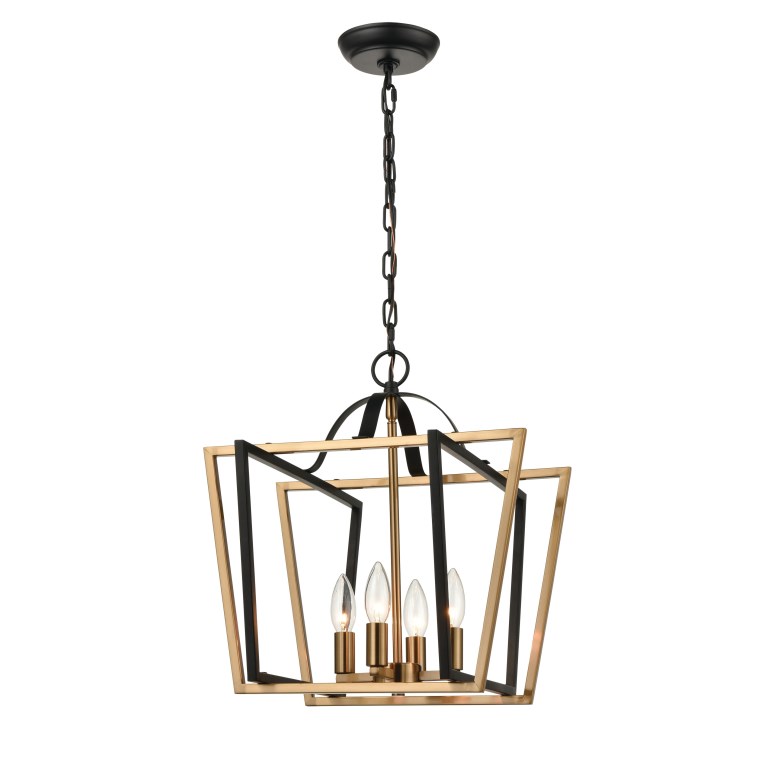
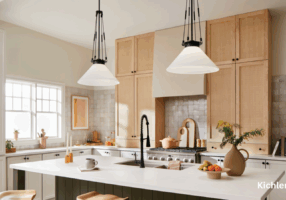
Elk Home Bridgette 6” WIDE 4-LIGHT PENDANT
Select your shade style
Metal shades: Metal shades are having a moment. They are very durable and offer a chic look that complements many interior styles. What’s more, their many different shapes, sizes, and colors allow you to create a bespoke look that caters to your design preferences.
Glass shades: Timeless and classic, glass shades offer a lovely diffused glow that rarely goes out of style. Choose from clear, seeded, frosted, or textured glass that coordinates with other design elements in your kitchen.
Fabric shades: Shades in linen or other durable fabric instantly elevate a kitchen island. Keep in mind fabric shades may not be the best choice if your island includes a cooktop or sink. Contact a local lighting showroom for recommendations specific to your space.
Rattan shades: Woven shades offer a warm counterpoint to a kitchen’s sharp corners and gleaming surfaces.
4. Coordinate with the Surroundings
Make sure your island lighting plays well with other design elements in your kitchen for a cohesive look. Pick out wall sconces or hardware in a matching finish. If you like the look of mixing metals, pick one as your primary metal finish and one coordinating metal. To prevent visual overwhelm, keep it to two metals, especially in smaller spaces. For best results, coordinate your metals. Brass, copper, and nickel have warm undertones and mix well together, while cooler undertoned metals like chrome, silver, and stainless steel work best together.
If your home has an open plan layout where the kitchen, living room, and dining area aren’t separated by walls, coordinate your palette and fixtures among these three spaces. In this situation, there is such a thing as too much of a good thing. Sticking to one metal or finish can feel overwhelming, so consider mixing finishes to create visual interest and a unique look.
5. Mind Your Lumens
While there are no hard and fast rules about exactly how many lumens a kitchen island needs, enough light to illuminate the entire surface is recommended. A range of 35 to 50 lumens per square foot should provide ample brightness as long as the remainder of your kitchen receives adequate lighting. For example, the average kitchen island is 40 x 80 inches, which amounts to a little over 22 square feet. Based on the recommended lumens per square foot, it will need between 770 and 1,100 lumens.
Keep in mind lighting needs may change throughout the day and depending on the activity. You can also control the amount of light cast over a kitchen island by installing a dimmer switch. Cut up fruit and vegetables with the fixtures on maximum brightness, then adjust the light intensity when dining or entertaining.

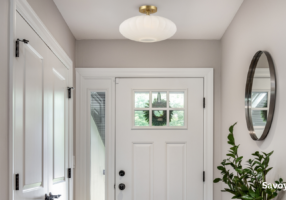
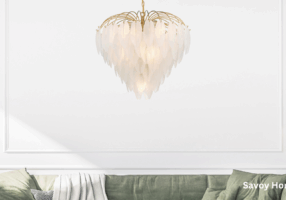
Savoy House Hendren Pendant
Large kitchen island fixtures
PROS:
1. Statement making
2. Creates focal point
3. One and done design
CONS:
1. More expensive on average
2. Not recommended for smaller kitchens and/or islands
3. Usually more complex to install

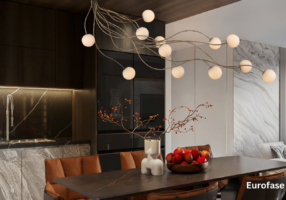
Eurofase Heera Pendant
Small kitchen island fixtures
PROS:
1. Blend with existing decor
2. More affordable on average
3. More blendable, subtle lighting
4. More style options
CONS:
1. Provide less light
2. Can look cluttered depending on kitchen design
Brighten Your Kitchen Island
Thoughtfully curated island lighting is a wonderful way to blend function and style in a kitchen. It often acts as the space’s focal point and finishing touch to the design. A Lighting One member showroom can help you with all of the steps above and more to create a beautiful kitchen. Use our showroom finder to connect with a lighting expert near you.

Bathroom Lighting Trends

Kitchen Lighting Trends

Outdoor Lighting Trends

Design